
“`html
The Indispensable garden Knife: A Comprehensive Guide
The Indispensable Garden Knife: A Comprehensive Guide
The garden knife, often overlooked in favor of more specialized tools, is a versatile and essential companion for any gardener. From delicate pruning to robust harvesting, a good garden knife can tackle a multitude of tasks with precision and ease. This article delves into the various types, uses, maintenance, and selection criteria of garden knives, providing a comprehensive guide for both novice and experienced gardeners.
Understanding the Versatility of a Garden Knife
A garden knife is not merely a cutting tool; it’s an extension of the gardener’s hand, capable of performing a wide array of tasks. Its versatility stems from its design: a sharp, often single-edged blade, a comfortable handle, and a robust construction. This combination allows for precise cuts, efficient harvesting, and even soil preparation.
Pruning and Budding
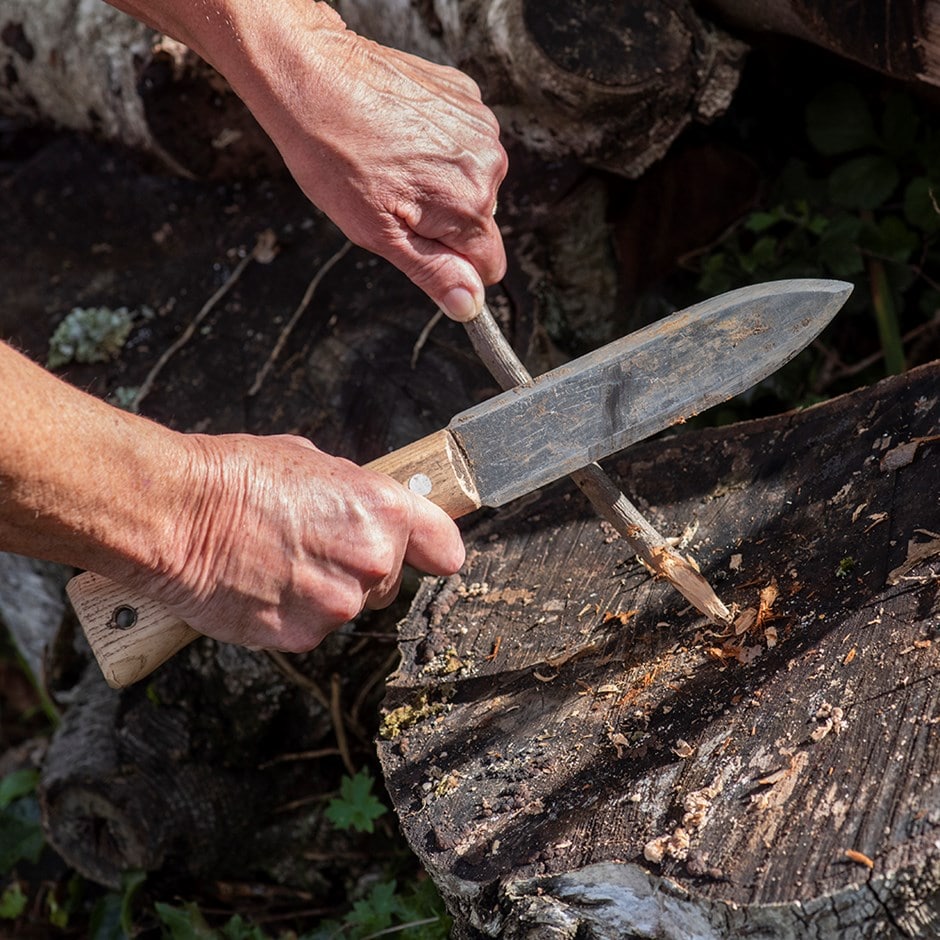
One of the primary uses of a garden knife is pruning. Whether it’s trimming delicate shoots, removing dead branches, or shaping shrubs, a sharp garden knife provides clean cuts that promote healthy growth. Budding, a technique used to propagate plants by grafting buds onto a rootstock, also relies on the precision of a garden knife.
Harvesting
Harvesting fruits, vegetables, and herbs is another crucial role of the garden knife. Clean cuts prevent damage to the plant and ensure a longer shelf life for the harvested produce. From slicing through the stems of ripe tomatoes to carefully separating heads of lettuce, a garden knife makes harvesting efficient and precise.
Soil Preparation and Weeding
Beyond cutting, a garden knife can also be used for soil preparation and weeding. It can help loosen compacted soil, create planting holes, and even divide root clumps. When it comes to weeding, a garden knife can be used to slice through stubborn roots, making it easier to remove weeds without disturbing surrounding plants.
Grafting and Dividing Plants
For gardeners interested in propagation, a garden knife is indispensable for grafting and dividing plants. Grafting, the process of joining two plants to grow as one, requires precise cuts to ensure a successful union. Dividing plants, such as perennials, involves separating the root system into multiple sections, each capable of growing into a new plant.
Types of Garden Knives
Garden knives come in various shapes and sizes, each designed for specific tasks. Understanding the different types can help you choose the right knife for your gardening needs.
Straight Blade Knives
Straight blade knives are the most common type of garden knife. They are versatile and suitable for a wide range of tasks, including pruning, harvesting, and weeding. The straight edge allows for clean, precise cuts, making them ideal for delicate work.
Curved Blade Knives
Curved blade knives, also known as grafting knives, are designed for specific tasks like budding and grafting. The curved blade allows for precise slicing and peeling, making it easier to create the necessary cuts for successful grafting. Some curved blades are also helpful for harvesting certain vegetables.
Folding Knives
Folding garden knives offer portability and convenience. They are easy to carry and store, making them ideal for gardeners who move around their garden frequently. Folding knives often come with safety features, such as locking mechanisms, to prevent accidental cuts.
Japanese Hori-Hori Knives
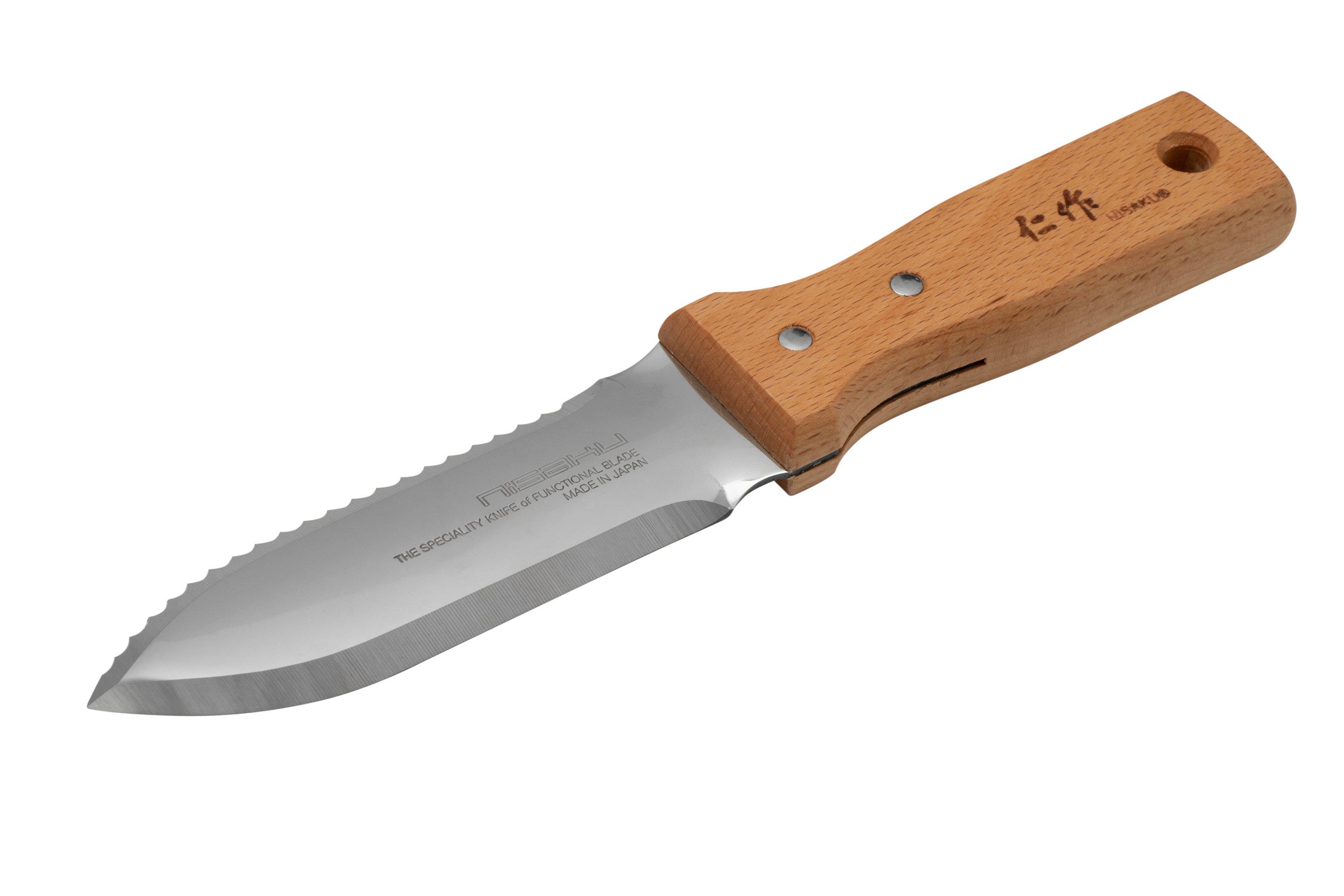
The Japanese hori-hori knife is a multi-purpose tool that combines the features of a knife and a trowel. It has a broad, flat blade with a sharp edge and a serrated edge, making it suitable for digging, weeding, and cutting. The hori-hori knife is a popular choice among gardeners who prefer a single tool for multiple tasks.
Specialty Knives
In addition to the common types, there are also specialty garden knives designed for specific tasks. These include mushroom knives, which have a curved blade and a brush for cleaning mushrooms, and asparagus knives, which are designed for harvesting asparagus spears without damaging the crown.
Choosing the Right Garden Knife
Selecting the right garden knife depends on your specific needs and preferences. Consider the following factors when making your choice:
Blade Material
The blade material is a crucial factor in determining the durability and sharpness of a garden knife. Common blade materials include stainless steel, carbon steel, and high-carbon steel. Stainless steel is resistant to rust and corrosion, while carbon steel and high-carbon steel are known for their sharpness and edge retention.
Blade Shape and Size
The blade shape and size should match the tasks you intend to perform. For delicate work, a small, straight blade is ideal. For grafting and budding, a curved blade is necessary. Consider the size of your hand and the type of plants you work with when choosing the blade size.
Handle Material and Ergonomics
The handle should provide a comfortable and secure grip. Common handle materials include wood, plastic, and rubber. Ergonomic handles are designed to reduce hand fatigue and prevent slippage, especially when working in wet conditions. Consider the weight and balance of the knife when evaluating the handle.
Tang Construction
The tang is the portion of the blade that extends into the handle. A full tang, which extends the entire length of the handle, provides greater strength and stability. A partial tang, which extends only partway into the handle, may be sufficient for light-duty tasks.
Safety Features
Safety features, such as locking mechanisms and sheaths, are essential for preventing accidents. Folding knives should have a reliable locking mechanism to prevent the blade from closing during use. A sheath or protective cover can protect the blade and prevent accidental cuts when the knife is not in use.
Maintaining Your Garden Knife
Proper maintenance is essential for keeping your garden knife in top condition. Regular cleaning, sharpening, and oiling will prolong the life of your knife and ensure optimal performance.
Cleaning
After each use, clean the blade with warm, soapy water and dry it thoroughly. Remove any sap, dirt, or plant residue that may accumulate on the blade. For stubborn residue, use a mild abrasive cleaner or a specialized knife cleaner.
Sharpening
A sharp blade is essential for clean cuts and efficient work. Sharpen your garden knife regularly using a sharpening stone, honing steel, or sharpening system. Follow the manufacturer’s instructions for the specific sharpening tool you are using. Maintain the correct angle and pressure to avoid damaging the blade.
Oiling
Oiling the blade helps prevent rust and corrosion. Apply a thin coat of mineral oil or camellia oil to the blade after cleaning and sharpening. This will create a protective barrier and keep the blade smooth and sharp. Avoid using vegetable oils, as they can become sticky and attract dirt.
Storage
Store your garden knife in a dry, safe place. A sheath or knife block can protect the blade and prevent accidents. Folding knives should be stored in the closed position. Avoid storing knives in damp or humid environments, as this can lead to rust and corrosion.
Safety Tips for Using a Garden Knife
Using a garden knife safely is crucial for preventing injuries. Follow these safety tips to ensure a safe and enjoyable gardening experience:
Use the Right Tool for the Job
Choose the appropriate garden knife for the task at hand. Avoid using a knife for tasks that it is not designed for, as this can lead to accidents and damage the knife.
Keep the Blade Sharp
A sharp blade is safer than a dull blade. A dull blade requires more force to cut, increasing the risk of slipping and causing injury. Sharpen your knife regularly and replace it when necessary.
Cut Away from Yourself
Always cut away from your body and keep your fingers clear of the blade. Avoid cutting towards yourself or others.
Wear Protective Gear
Wear gloves to protect your hands from cuts and abrasions. Consider wearing safety glasses when performing tasks that may cause debris to fly towards your eyes.
Be Mindful of Your Surroundings
Pay attention to your surroundings and avoid using a garden knife in crowded or cluttered areas. Keep children and pets away from sharp tools.
Store Knives Safely
Store your garden knife in a safe place, out of reach of children and pets. Use a sheath or knife block to protect the blade and prevent accidents.
Conclusion
The garden knife, a seemingly simple tool, is a versatile and indispensable companion for any gardener. By understanding the different types, uses, maintenance, and safety tips, you can select the right garden knife for your needs and enjoy a safe and productive gardening experience. Whether you are pruning delicate shoots, harvesting ripe tomatoes, or weeding stubborn roots, a good garden knife will make your gardening tasks easier and more enjoyable. Invest in a quality garden knife and take care of it properly, and it will serve you well for years to come.
“`


