
Let’s be real: garden/’>gardening in a tropical climate is both a blessing and a bit of a workout. On one hand, you don’t have to worry about frost killing off your prize hibiscus. On the other hand, the humidity can feel like a warm wet blanket, and the midday sun is basically a laser beam aimed at your flower beds.
If you’ve ever bought a beautiful plant only to watch it turn into a crispy brown stick within a week, you aren’t alone. Tropical gardening isn’t just about watering more; it’s about choosing “tough-as-nails” plants that actually thrive when the mercury rises. Whether you’re looking for vibrant splashes of color or lush, leafy privacy screens, here is your guide to the best outdoor plants for a hot tropical climate.
—
Bougainvillea: The Queen of Tropical Color
If you want a plant that actually loves being ignored, Bougainvillea is your best friend. These woody vines are famous for their paper-like “flowers” (which are actually modified leaves called bracts) in shades of neon pink, purple, orange, and white.
The secret to Bougainvillea is that it thrives on neglect. It loves the hottest, most direct sun you can find. In fact, if you water it too much or give it too much fertilizer, it will grow plenty of green leaves but zero flowers. To get that iconic explosion of color, let the soil dry out completely between waterings. Just watch out for the thorns—they’re no joke!
Hibiscus: The Iconic Tropical Staple
Nothing says “island vibes” quite like a Hibiscus bloom. These plants are the heavy lifters of tropical landscapes. They come in two main varieties: tropical and hardy, but in a hot climate, you’ll want the tropical versions.
Hibiscus plants love the sun, but they are hungrier and thirstier than Bougainvillea. To keep them blooming year-round, you’ll want to give them consistent water and a bit of “hibiscus food” (potassium-rich fertilizer). They work beautifully as hedges or standalone statement pieces. Plus, the flowers attract hummingbirds and butterflies like crazy.
Bird of Paradise: Architectural Elegance
If you want a plant that looks like a piece of modern art, look no further than the Bird of Paradise (Strelitzia reginae). Its orange and blue flowers look exactly like the head of a tropical crane.
These plants are incredibly sturdy. They have thick, waxy leaves that are designed to retain moisture, making them very heat-tolerant. They can handle full sun, but they also don’t mind a little bit of afternoon shade if the heat gets truly intense. They grow in clumps, making them great for filling up empty corners of the garden.
Crotons: Nature’s Paintbrush
Who needs flowers when you have leaves like these? Crotons are famous for their “technicolor” foliage. Depending on the variety, the leaves can be striped, spotted, or veined with bright yellow, deep red, orange, and emerald green.
The trick with Crotons is that the more sun they get, the brighter their colors become. If you plant them in the shade, they tend to turn mostly green. They are fantastic for adding a permanent pop of color to your garden that doesn’t rely on a blooming cycle.
Plumeria: The Fragrant Favorite
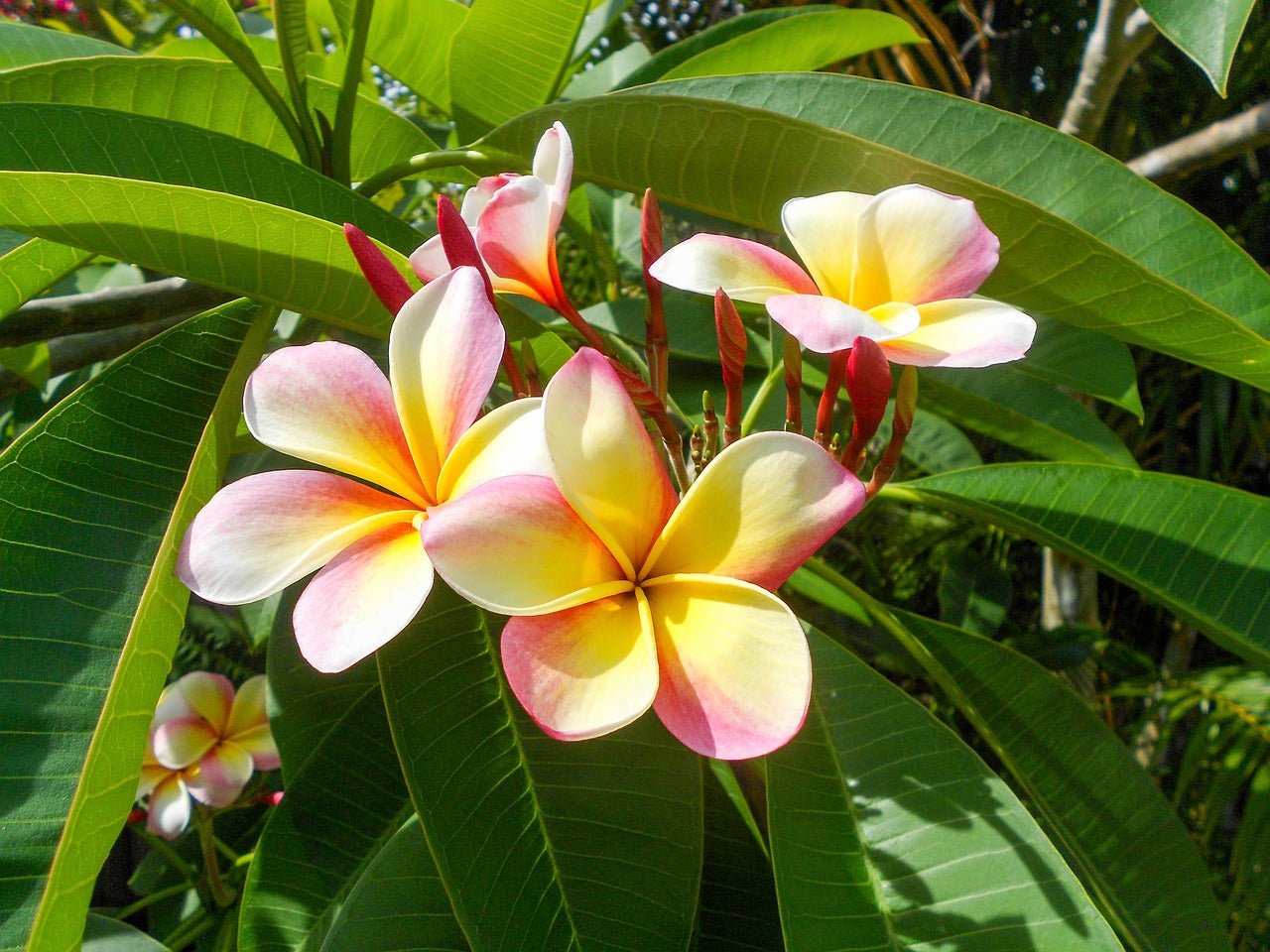
Also known as Frangipani, Plumeria is the plant responsible for that “tropical resort” smell. These trees are surprisingly drought-tolerant once they are established. They have thick, succulent-like branches and produce clusters of incredibly fragrant flowers.
Plumeria needs plenty of sunlight to bloom—at least six hours a day. One thing to keep in mind is that they can go dormant and lose their leaves if there is a slightly cooler “winter” or a very dry season. Don’t panic; it’s just the plant taking a nap. Once the rain returns, the leaves and flowers will pop right back.
Snake Plants: The Unstoppable Foliage
Most people think of Snake Plants (Sansevieria) as indoor plants, but in tropical climates, they are monsters in the garden. They are practically indestructible. They can handle the harshest direct sun, but they’ll also grow in total shade.
Because they are succulents, they store water in their leaves, meaning they can go weeks without rain. They are perfect for “set it and forget it” landscaping. Use them as a modern-looking border or to fill in those awkward spots where nothing else seems to grow.
Adenium: The Desert Rose
The Adenium is often called the “Desert Rose” for a reason. It looks like a miniature baobab tree with a thick, bulbous trunk and beautiful trumpet-shaped flowers. This plant is a true sun-worshipper.
The thick trunk (caudex) stores water, which allows the Adenium to survive long periods of drought. In fact, the biggest danger to an Adenium is overwatering, which can cause the roots to rot. Plant it in well-draining sandy soil, put it in the hottest spot in your yard, and it will reward you with gorgeous blooms for most of the year.
Bromeliads: Exotic and Low Maintenance
If you want something that looks exotic but requires almost zero effort, Bromeliads are the way to go. These plants often grow on trees in the wild (epiphytes), but they do just as well in pots or in the ground.
They have a central “tank” or “cup” formed by their leaves. In nature, this cup catches rainwater. All you have to do is make sure there’s a little bit of water in that central cup, and the plant will take care of the rest. They come in stunning neon colors and add a very “jungle” feel to any outdoor space.
—
Conclusion: Success in the Tropics
Gardening in a hot tropical climate is all about working with nature rather than against it. By choosing plants like Bougainvillea, Hibiscus, and Adenium, you are picking species that have evolved to thrive in high temperatures and intense UV rays. Remember that even the toughest tropical plants need a little help getting established; give them regular water for the first few weeks after planting. Once their root systems are deep, you can sit back with a cold drink and enjoy your lush, vibrant backyard paradise without breaking a sweat.
—
Frequently Asked Questions
How often should I water my tropical plants during a heatwave?
Even heat-loving plants need a drink when the temperature spikes. It’s best to water deeply early in the morning (before 8:00 AM) or in the late evening. This prevents the water from evaporating immediately and allows the roots to soak it up before the midday sun hits.
Why are the leaves on my tropical plants turning yellow?
In a tropical climate, yellow leaves usually mean one of two things: overwatering or a nutrient deficiency. If the soil feels soggy, back off the water. If the soil is fine, your plant might need a dose of chelated iron or a balanced fertilizer to jumpstart its chlorophyll production.
Can I grow succulents in a humid tropical climate?
Yes, but with a caveat. Most succulents hate “wet feet.” In a humid or rainy tropical environment, you must use very gritty, fast-draining soil and pots with plenty of drainage holes. Avoid fuzzy succulents, as they tend to trap moisture and rot; stick to waxy varieties like Agave or Aloe.
What are the best tropical plants for privacy?
Hibiscus and Areca Palms are excellent choices for natural screens. Hibiscus can be pruned into a dense, flowering hedge, while Areca Palms grow quickly and provide a thick, feathery wall of green that still allows a nice breeze to pass through.
Do I need to fertilize my plants during the rainy season?
It’s actually a great time to fertilize, but use a slow-release granular fertilizer. Heavy tropical rains can wash away liquid fertilizers before the plant can absorb them. Slow-release pellets will break down gradually with the rain, providing a steady stream of nutrients.

:max_bytes(150000):strip_icc()/low-light-conditions-houseplants-1902917-834ee8847a324939b796845a6bc22d36.png?resize=200,135&ssl=1 "Snake Plant (")

